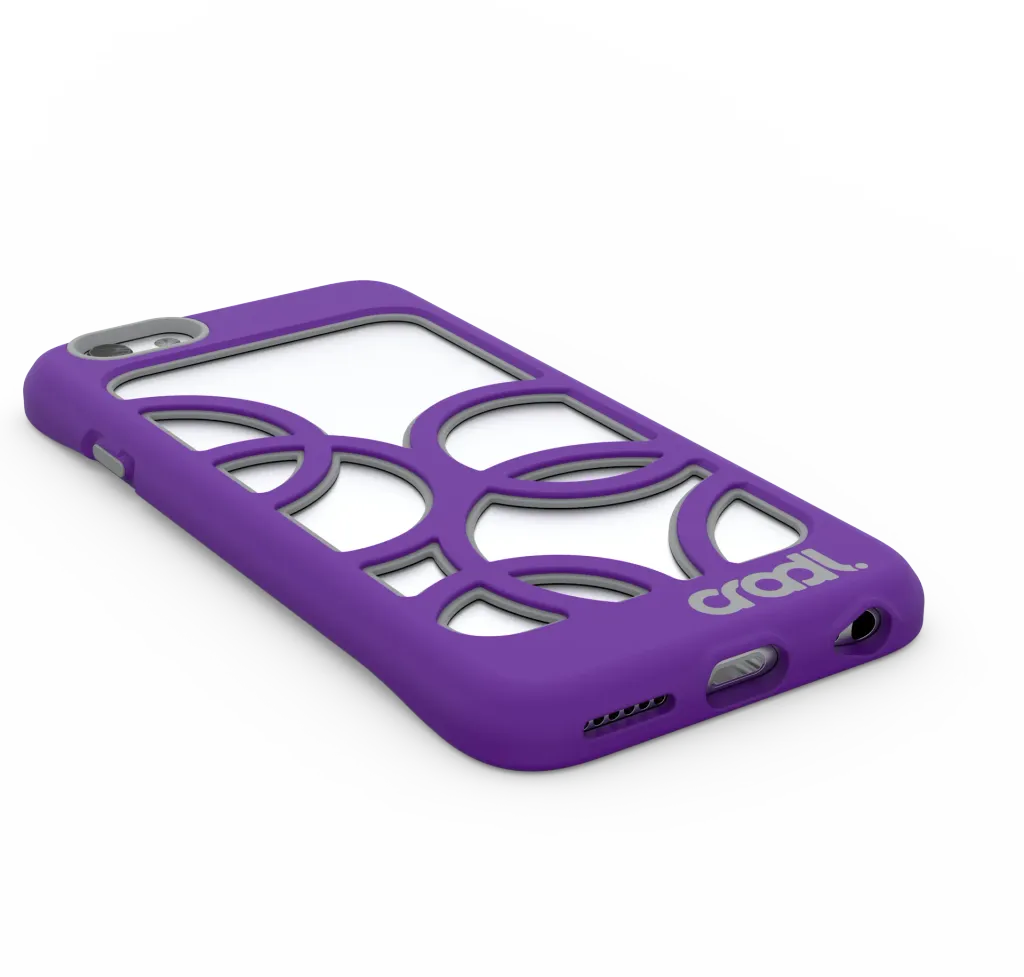
At a glance
- Problem
- A new brand wanted a rugged, stylish case, but a protective raised lip would block the edge swipes newer phones relied on.
- My role
- Designed the case and its drop-down sides; advised on dual-shot construction; modeled part of the packaging.
- Result
- Launched at CES in January 2015; six US utility patents name me as an inventor.
- Client
- cradl.
- Role
- Design consultant: case design, dual-shot construction advice, and part of the packaging CAD
- Timeframe
- 2014–2015
- Team
- Founders Elizabeth Dining and Erin Watt (back artwork); Cameron Brown and Zachary Conrad (packaging, manufacturing)
- Disciplines
- Consumer Goods · Injection Molding
- Outcome
- 6 US utility patents naming me as an inventor; launched at CES 2015
- Client
- cradl.
- Role
- Design consultant: case design, dual-shot construction advice, and part of the packaging CAD
- Timeframe
- 2014–2015
More details
- Team
- Founders Elizabeth Dining and Erin Watt (back artwork); Cameron Brown and Zachary Conrad (packaging, manufacturing)
- Disciplines
- Consumer Goods · Injection Molding
- Outcome
- 6 US utility patents naming me as an inventor; launched at CES 2015
Context
Cradl is a phone-case company that Elizabeth Dining and her daughter Erin Watt founded in Boulder, Colorado, in 2014. They wanted a case that was both stylish and protective. Their request for proposals arrived in February 2014, and the brand launched at CES in January 2015.
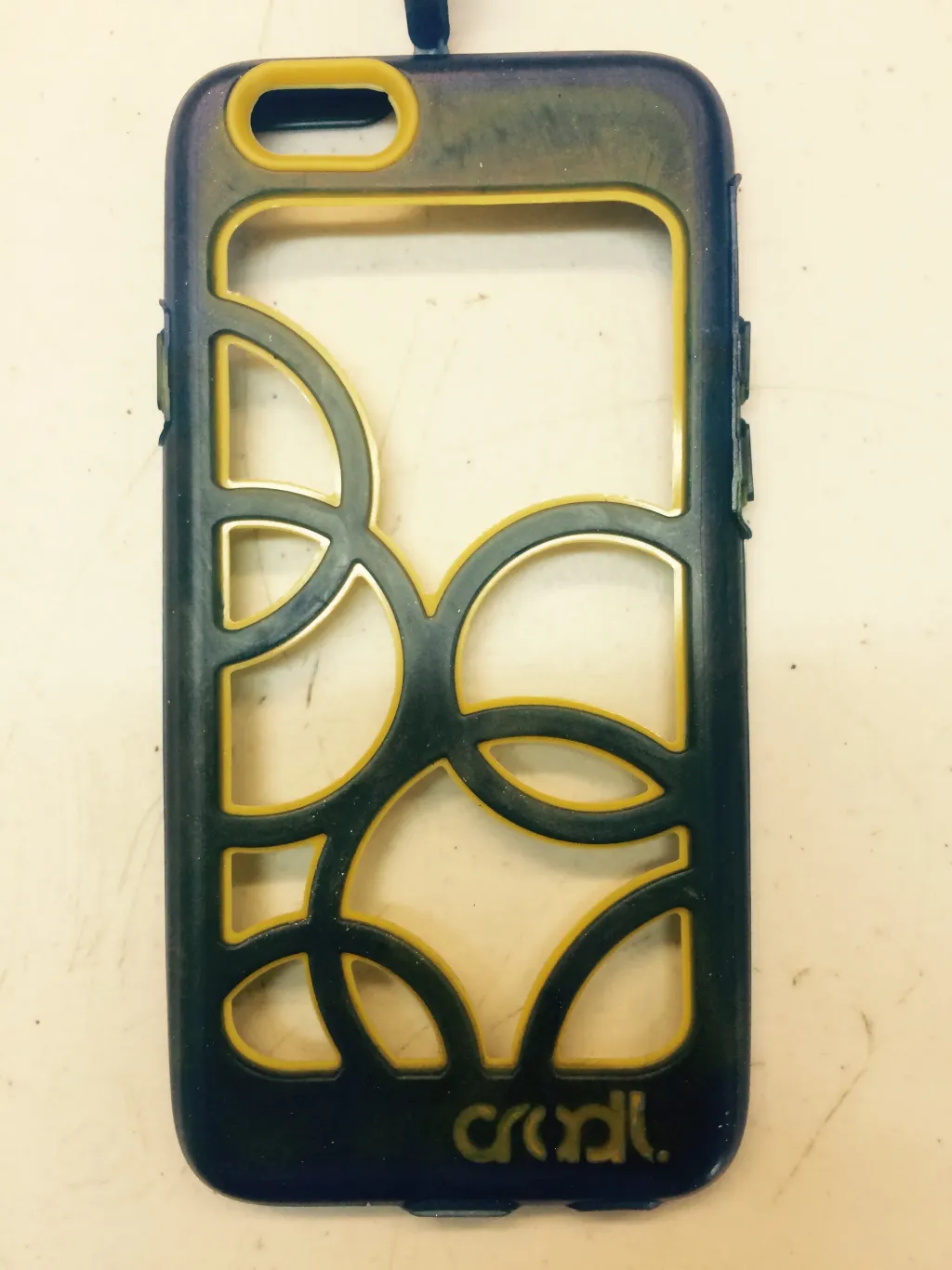
I worked with Cradl as a design consultant, through my studio Droid Replicator, for just under a year. I designed the case, advised on the dual-shot molding and the case’s construction, and did some of the CAD for the packaging. Erin supplied the artwork embossed on the back: the Bubbles, Blocks, and Trees patterns.
Problem
Rugged cases protect the screen with a raised lip around the edge. Newer phones were starting to rely on swiping in from that edge, so the usual answer to protection got in the way of using the phone.
- Protection means a lipA raised rim around the screen keeps it off the ground in a drop.
- Phones moved to the edgeNewer phones relied on gestures that start at the screen’s edge.
- The lip blocks the swipeA raised rim sits exactly where the thumb needs to start.
- A case that leaves the edge freeThe sides needed to drop away where the thumb swipes, and still protect.
Constraints
- Manufacturing cost was the only hard requirement.
Drop protection was a goal, but there was no defined target to design to.
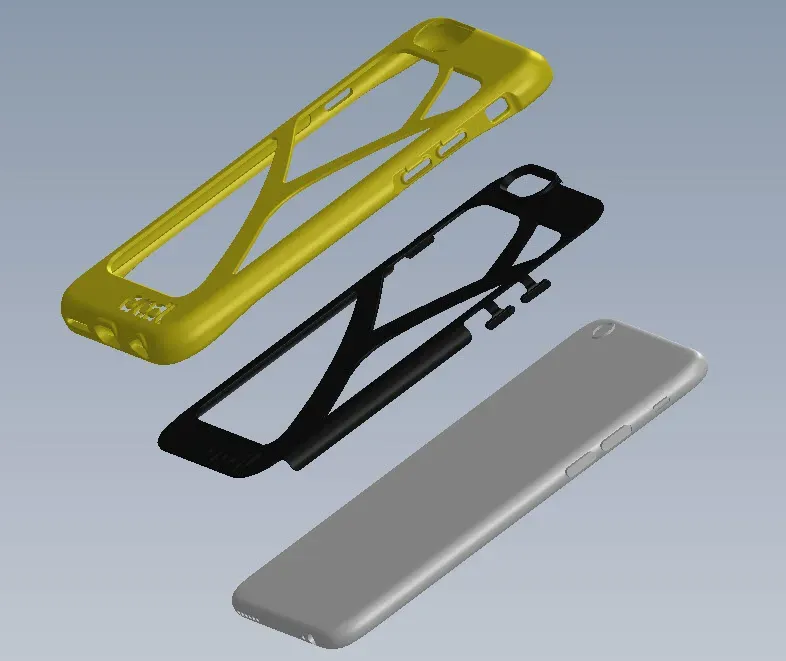
Combine a rigid inner skeleton with a soft, shock-absorbing outer shell, molded together.
- Carry the founders’ embossed artwork on the back.
- Cover more than one device: the iPhone 6 and the iPad Air.
What I did
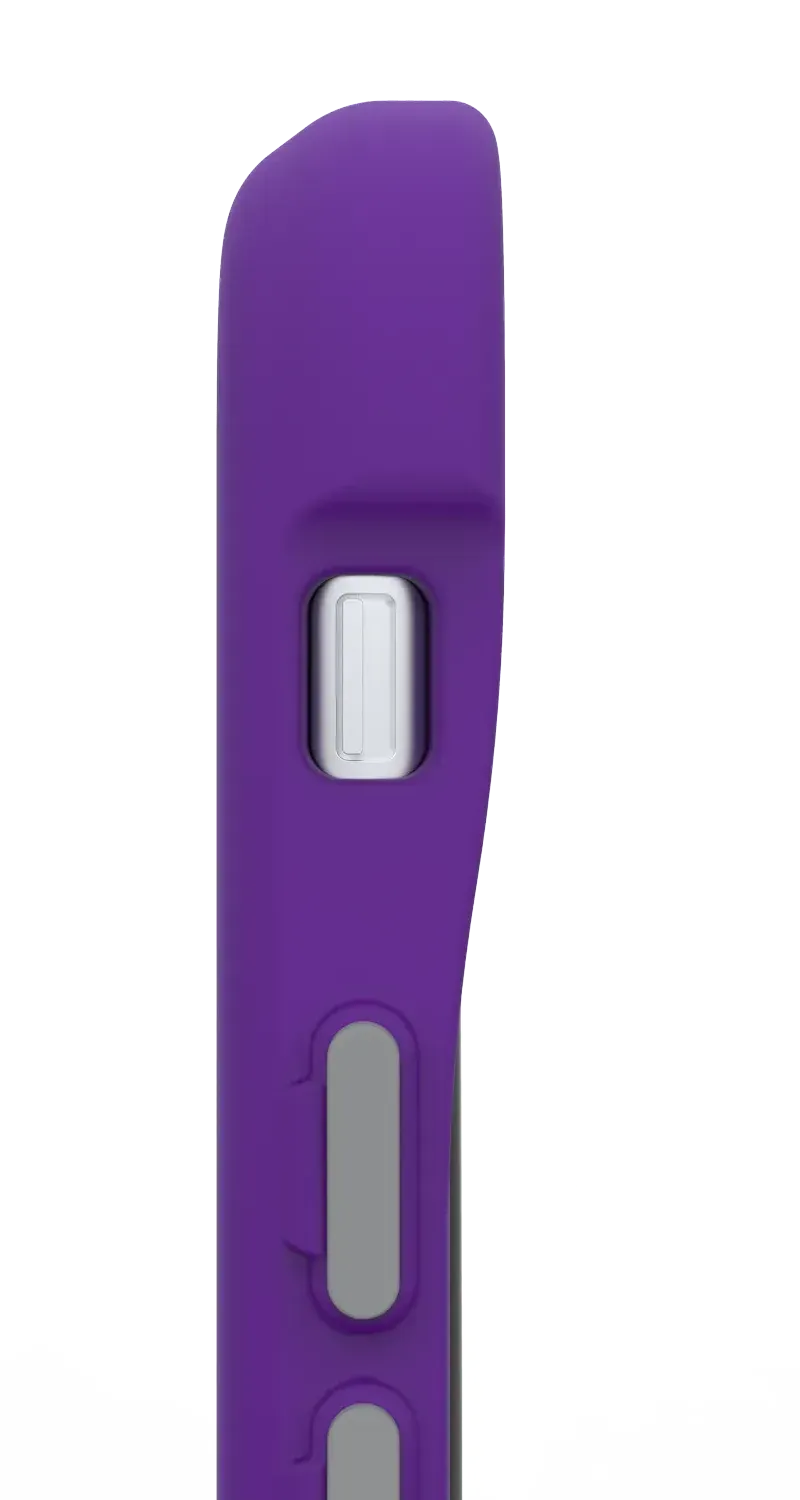
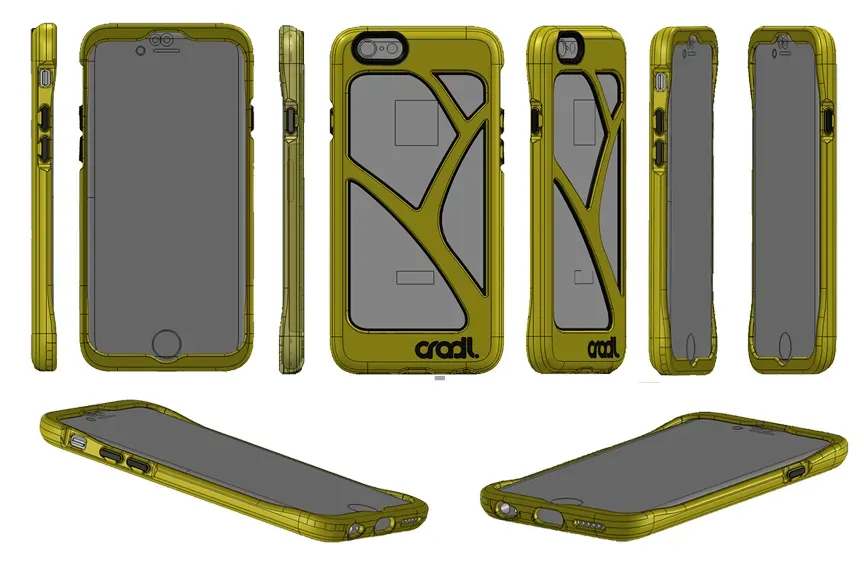
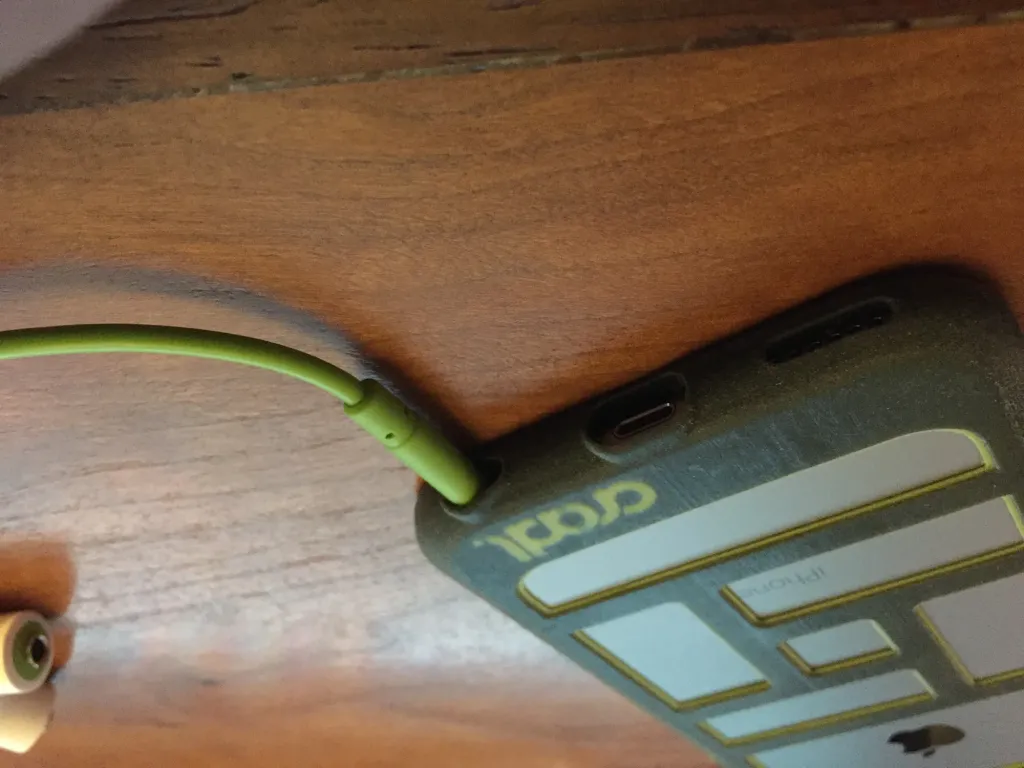
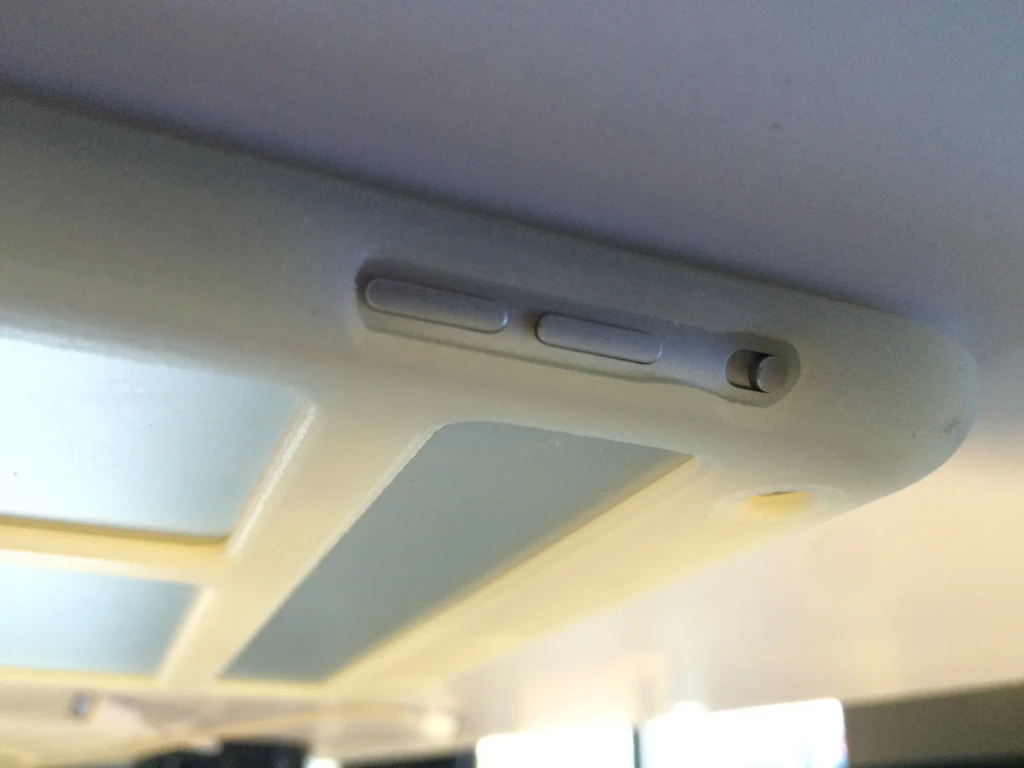
The key move: sides that drop away. I pointed out that newer phones needed room to swipe from the edge, and that a raised lip would get in the way. So the sides of the case drop down along the screen, which leaves uninterrupted side-to-side swipe access. That feature is what Cradl’s utility patents cover.
Then I designed the rest of the system around it.
Advised on the dual-shot molding and part of the case’s construction, so the rigid skeleton and soft shell mold together.
- Carried Erin’s back artwork into the case as the Bubbles, Blocks, and Trees patterns.
- Designed versions for the iPhone 6 and the iPad Air.
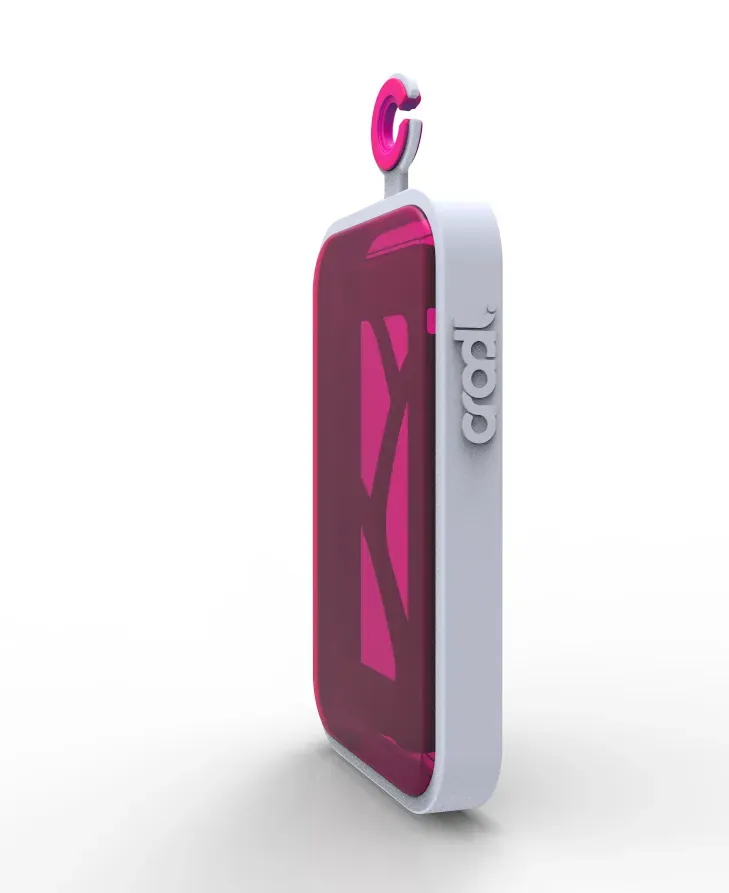
Did some of the CAD for the retail packaging. Cameron Brown and Zachary Conrad handled the packaging and some of the manufacturing coordination.
Outcome
Cradl launched at CES on January 6, 2015, and released its iPhone 6/6s line in April 2016 (cradl.). I ended the engagement after the design phase.
6
- US 9,300,768: protective case for portable electronic device
- US 9,480,319: protective case for portable electronic device
- US 10,327,524: protective case for portable electronic device
- US 10,820,675: protective case for portable electronic device
- US 11,399,606: protective case for portable electronic device
- US 12,604,956: protective case for portable electronic device
Review
Cradl taught me how to work with first-time founders and manage their expectations. The biggest lesson was to give clients more information up front so they can make their own choices. Tooling costs came as a surprise to the founders, and they had to navigate that sticker shock.